Good patching starts below the finish. Sound edges, compatible layers, careful tooling, and honest expectations all shape the result.
Matching is a process, not a promise
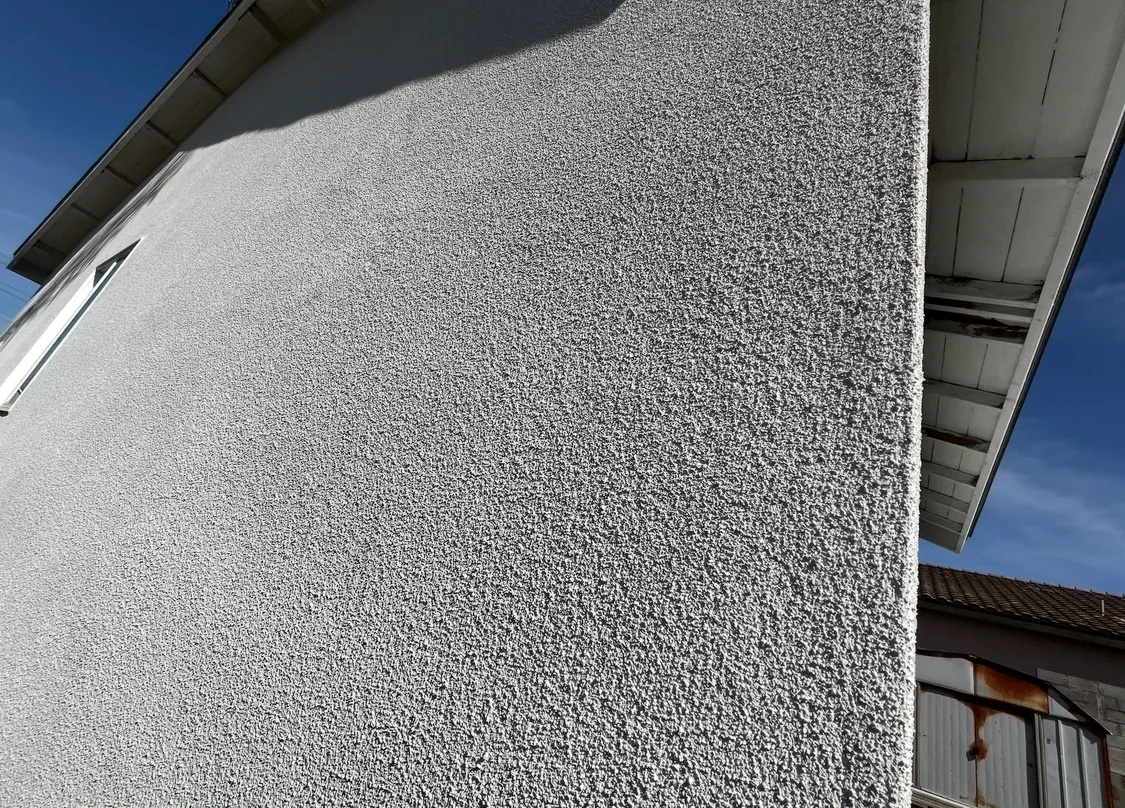
Existing stucco changes with age, coatings, repairs, sun exposure, aggregate, and application technique. A skilled repair can blend the texture and manage the transition, but a tight patch may still read differently from the surrounding wall.
When appearance is a priority, the right scope may extend beyond the damaged spot. That decision should be made before work begins, with the wall size, viewing distance, coating history, and owner expectations in view.
What belongs in the proposal
- Removal limits and preparation to sound material
- Layers and reinforcement included in the repair
- Treatment around pipes, vents, windows, and doors
- Texture sample or approval process when appearance is critical
- Paint, color coat, or broader finish area included
- Protection, access, cleanup, and hidden-condition procedure
Where photo review helps
Photos can show the size, location, texture, coating, and nearby transitions. Include one image with an object for scale when it can be done safely. We may still need an onsite review when the area is elevated, widespread, hollow, soft, water-related, or difficult to access.
Related AWC work and guidance
Color coat, paint, and future patch matching
Understand finish variation and save the product, color, texture, and batch records that help plan a later repair.
Case study: stucco patch after plumbing repair
A documented cleanout-access repair, with the damp stucco stage distinguished from a final color match.
Related interior drywall repair
AWC’s related service for interior drywall restoration when an exterior-wall project also affects interior finishes.
Opening a wall can change the repair limits. Additional work requires documentation and written approval.