
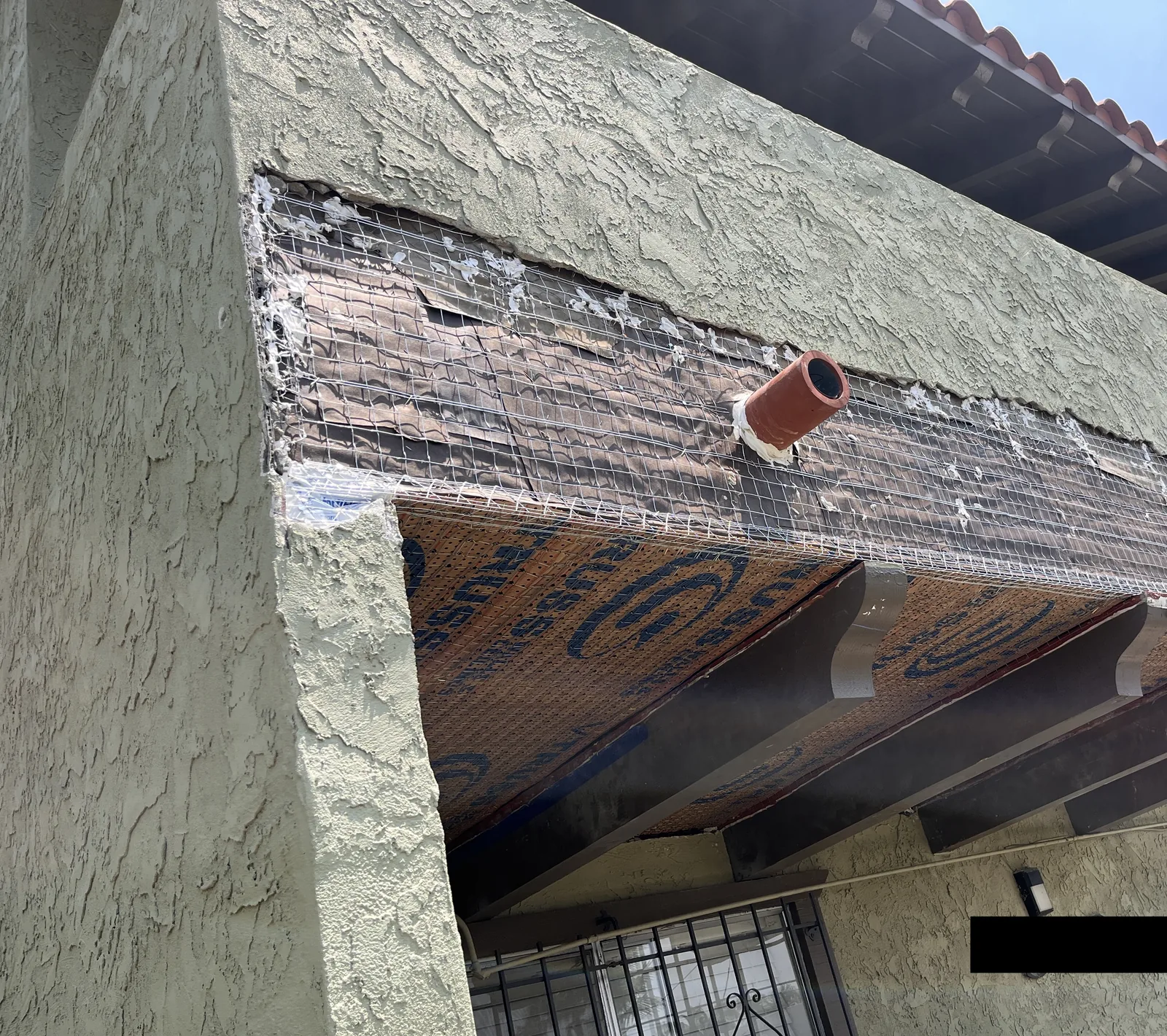
Water can show up at the finish far from its entry point. A responsible scope separates what is visible from what still needs to be verified.
Follow the assembly
Windows, doors, roof-to-wall areas, parapets, decks, balconies, penetrations, gutters, and sealant joints can all meet a stucco wall. The surface condition may help narrow the review, but it cannot confirm the water path or concealed damage by itself.
The repair plan should identify adjoining components that are included and those that need a separate trade or further investigation.
A clear water-related scope separates
- Observed staining, cracking, softness, or separation
- Accessible tests and inspection areas included
- Assumed repair layers and expected removal limits
- Transitions and adjoining components included or excluded
- Drying, protection, and sequencing requirements
- Documentation and written approval for concealed conditions
When an onsite review is warranted
Recurring leaks, broad staining, elevated areas, openings, balconies, occupied interiors, and multi-trade conditions usually need field verification. Our $250 Site Evaluation + Written Bid Package is available when a responsible proposal cannot be developed from photos and records alone. The fee is credited when the proposed work is approved within 30 days.
Related AWC work and guidance
Stucco moisture, drainage, and coatings
Understand wall-base wicking, weep screeds, retaining-wall moisture, efflorescence, and coating limitations.
Case study: repair at a sliding-door base
A documented surface repair at a door transition, with concealed-condition and finish limits kept clear.
Balcony and deck repair
AWC’s related service for balcony, deck, and waterproofing transitions that meet stucco walls.
Gutter and drainage work
AWC’s related service for gutter overflow and downspout conditions that can affect exterior walls.
Opening a wall can change the repair limits. Additional work requires documentation and written approval.